常启德:五十周年快乐,重新构想中国和联合国合力所能取得之成就
近日,联合国驻华协调员常启德撰写署名文章《五十周年快乐:重新构想中国和联合国合力所能取得之成就》。文章如下:
《五十周年快乐:重新构想中国和联合国合力所能取得之成就》
作者:常启德
联合国驻华协调员
中国是联合国创始会员国之一,也是1945年于旧金山第一个在《联合国宪章》上签字的国家。
但直到1971年10月,乔冠华先生带领中国代表团出席联大,中国才恢复了在联合国的合法席位。那刻起,联合国有幸见证并协助中国迎来全球历史中社会经济发展最为迅猛的时期之一。
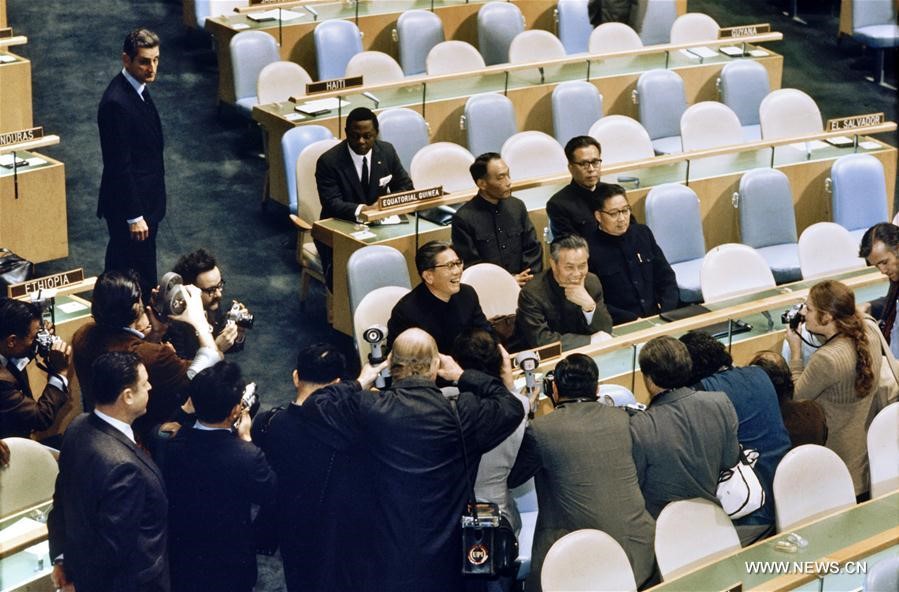
中华人民共和国代表团首次亮相联合国大会堂(来源:新华社)
如今,在中国重返联合国五十周年之际,我很荣幸于今年早些时候就任联合国驻华协调员一职。
我本人虽来华不久,才刚刚开启对中国五千多年瑰丽锦绣文明的了解,但联合国驻华系统却早已有幸成为了中国自改革开放以来深刻经济及社会变革的建设者和见证人。
值此纪念双方长达半个世纪的合作之际,一个问题自然浮现:联合国和中国现在应何去何从?
当前,中国和世界均处在重要关口,这个问题至关重要。世界虽暂时摆脱了2019冠状病毒病疫情的阴霾,但许多国家仍在苦苦挣扎。与此同时我们面临着气候变化带来的威胁,包括创纪录的高温、火灾、风暴和其他灾害。实现可持续发展目标的“行动十年”正步入倒计时。
中国在过去数十年间所展现的领导力堪称典范,因此我坚信,在未来的岁月里,我们可以取得更大成就。
中国创纪录的经济发展
1978年,邓小平的改革开放政策使中国大地发生了翻天覆地的变化,其中一个典例便是深圳仅仅用了一代人的时间里,便从珠江三角洲的一个渔村成长为研究和创新的国际中心。
1979年,中国接受联合国的发展援助,开始借鉴联合国在扶贫和工农业增长方面的长期经验。
在此后的四十多年里,中国的成功不啻为一个奇迹。这期间,中国:
·帮助7.5亿多人摆脱了绝对贫困。
·投资公共卫生和教育,投资人力资本,从而构建了更幸福、更健康的劳动环境,促进了经济生产力的提高。
·依托外商投资、资源密集型制造业、低成本的劳动力和出口的增长模式,成为“世界工厂”。
·人均国内生产总值(GDP)倍增,从1979年的180美元达到今日12,000美元。
发展成果不仅体现在统计数据上,也体现在日常生活质量上。如今,市场经济的影子在中国随处可见,国内外奢侈品牌的精致商店遍布全国。这与我小时候在印度加尔各答唐人街附近长大时看到的、令我至今都亲切怀念的景象大相径庭:写着汉字的招牌下,拥挤的街巷,菜市场狭窄的过道,老人们在公园里玩着棋牌游戏。
上世纪80年代初的北京,大白菜往往是菜单上唯一的蔬菜。在联合国驻华发展机构的帮助下,市场供应得以扩大——丰富了中国国内蔬菜的品类,并从国外引进了西兰花等新品种。
令人惊叹的成功仍在继续。预计到2025年,中国的人均GDP将增长一倍以上,购买力平价修正后将超过25,000美元。国际货币基金组织预测,经过四分之一个世纪的经济高速增长,到2025年,中国将在世界人均收入排名中上升56位。
权威人士如联合国可持续发展目标倡导者、哥伦比亚大学可持续发展中心主任杰弗里·萨克斯(Jeffrey Sachs)教授表示,中国在遏制疫情和消除贫困方面给世界带来“启示”。
考虑到疫情对全球经济造成的冲击,中国取得的进展更为不凡。中国在这方面的慷慨和领导力值得赞扬。
在北京举行的第九届世界和平论坛上,中国外交部长王毅表示,要“加紧构筑抵御病毒的‘免疫长城’”。
然而,挑战依然存在。与处于这一发展阶段的所有经济体一样,对高增长的不懈追求已接近峰值,中国面临着新的经济、社会和环境挑战。
“2030年议程”及其后的新优先事项
若要在2030年前如期实现联合国可持续发展目标,我们就正处于最后的“行动十年”。在这个关键节点,我认为需要在三个领域紧密合作。
第一,新的可持续发展模式。政府认识到经济增长放缓是“新常态”。不断变化的人口架构、劳动力和投资情况为中国解决粮食安全、普遍存在的不平等以及实现全民医疗的成本效益带来了新的挑战。
在后小康时代,中国需要接纳推动公平和包容性进步的创新和服务,着手处理快速扩张后的遗留问题,以实现可持续发展目标,不让任何人掉队。
第二,气候变化。由于人口和经济基数巨大,中国是世界上最大的二氧化碳排放国,排放量占全球四分之一。在意识到这种发展模式的环境成本后,习近平主席为中国设定了一个雄心勃勃的目标,即力争2030年前实现碳达峰、2060年前实现碳中和。
要实现这一巨大成就,则需要转变中国的经济运作方式和人们的日常生活方式,投资和技术也需要转型。
第三,多边主义。中国倡导通过多边努力应对全球挑战。中国有意愿、有知识、有资源为可持续发展目标做出巨大贡献,在国际社会担当“领头羊”的角色。
如今,中国是联合国第二大维和摊款国,也是派遣维和人员数量最多的联合国安理会常任理事国。中国也为促进实现可持续发展目标和《巴黎协定》共识发挥了重要作用。
未来工作重点应放在扩大疫苗覆盖面、减免低收入国家的债务、为基础设施和气候行动提供可持续融资的倡议上。
中国与联合国
联合国驻华大家庭与中国的愿景保持一致。“2030议程”和最近商定的《合作框架》是在过去成果的基础上继续发展的蓝图。
在实现可持续发展目标的“行动十年”中,联合国可以为这一雄心提供支持,并本着南南合作的精神,汇集、联系和促进利益攸关方借鉴中国的发展经验造福其他国家,特别是非洲国家。
面对疫情,联合国秘书长安东尼奥·古特雷斯表示:“当我们努力应对(2019冠状病毒病)并从中恢复时,我们必须重新审视许多长期存在的假设,并重新考虑那些导致我们误入歧途的做法。我们还必须重新设想各国合作的方式。此次疫情凸显了加强和振兴多边主义的必要性。”
今年10月,联合国和中国将纪念五十周年历程。中国与联合国将重新构想未来、实践创新、增添活力,并继续挑起重担、投身日常工作,重新致力于为中国及世界人民创造持久的繁荣。
《HAPPY 50thANNIVERSARY: Re-Imagining What China and the United Nations Can Achieve Together》
By Siddharth Chatterjee
Resident Coordinator of the United Nations in China
China was one of the architects of the United Nations and was the first signatory of the UN Charter in San Francisco in 1945.
But it was only in October 1971, with the Chinese delegation led by Mr. Qiao Guanhua, that China’s representation at the UN resumed. Since that time, the UN has had the great privilege of witnessing and supporting China in achieving one of the greatest periods of socio-economic progress in world history.
Now, on the 50th anniversary of China in the UN, I am honoured to serve as the UN Resident Coordinator, a post I took earlier this year.
While I am a recent arrival to China, only just beginning to understand its rich tapestry of over 5,000 years of civilization, the UN in China has had the privilege to shape and witness the profound economic and social transformations that have occurred since reform and opening-up.
As we commemorate a half-century of cooperation, a question naturally emerges: Which way now for the UN and China?
This is a weighty question, as China and the world are at a critical juncture. Tentatively emerging from the COVID-19 pandemic, but with many countries still struggling terribly. Staring down the threats of climate change, with record-setting heat, fires, storms, and other disasters. Counting down the years in this “Decade of Action” to achieve the Sustainable Development Goals.
China’s standard-setting leadership in past decades gives me confidence that we can achieve even greater things in the years to come.
CHINA’S RECORD-BREAKING ECONOMIC DEVELOPMENT
In 1978, Deng Xiaoping’s Reform and Opening-up Policy began to transform the nation, as evidenced, for example, in Shenzhen, which changed from a fishing village on the Pearl River Delta into an international hub for research and innovation in a single generation.
And in 1979, China chose to accept development assistance from the UN, learning from its long experience in poverty alleviation and industrial and agricultural growth.
China’s success in the more than 40 years since then has been nothing short of miraculous. During this time, China:
·Lifted over 750 million people out of absolute poverty.
·Invested in public health and education, investing in human capital thus making possible a happier and healthier workforce that contributed to economic productivity.
·Became the world’s manufacturing centre, based on a growth model of foreign investments, resource-intensive manufacturing, cheap labour, and exports.
·Multiplied its per capita GDP from US $180 in 1979 to an incredible $12,000 today.
The signs of this progress are evident not just in statistics, but in daily quality-of-life matters. Throughout China now lie the classic hallmarks of a market economy, with opulent shops from luxury brands, foreign and domestic. A far cry from what I saw as a young boy growing up near Chinatown in my native Kolkata, India, though fondly remembered as a warren of alleys, narrow aisles of food markets, elderly men playing board games in parks, with Chinese characters on the signs overhead.
For example, in Beijing during the early 1980s, cabbage was often the only vegetable on menus. With help from the UN’s development agency in China, availability at markets expanded — supporting the diversification of domestic vegetables and introducing new ones from abroad, such as broccoli.
This startling success is on track to continue. China’s per capita GDP is projected to more than double by 2025, reaching over $25,000, adjusted for purchasing power. The country’s surging economy is set to overtake 56 countries in the world’s per-capita income rankings during the quarter-century through 2025, the International Monetary Fund projects.
No less an authority than Professor Jeffrey Sachs, a United Nations SDG Advocate and director of the Center for Sustainable Development at Columbia University, has called China an “inspiration” in stopping the pandemic and ending poverty.
This progress is all the more remarkable considering the hit that the pandemic has delivered to the global economy. China’s generosity and leadership on this front are commendable.
China’s Foreign Minister Wang Yi told the 9th World Peace Forum in Beijing “to build a "Great Wall of Immunity" to battle the COVID-19 pandemic.
Still, challenges remain. As with any economy at this stage of development, the relentless pursuit of high growth is reaching its natural limits, and China faces new economic, social, and environmental challenges.
NEW PRIORITIES FOR AGENDA 2030 AND BEYOND
The UN Sustainable Development Goals are meant to be achieved by the year 2030, and we are now in what is called “the Decade of Action.” I see three areas for close cooperation at this critical juncture.
First, a new sustainable development model.The Government recognizes slower economic growth as the “new normal.” Changing demographic, labour, and investment realities present China with new obstacles in addressing food security, pervasive inequalities, and cost-effectiveness in universal healthcare.
In a post-Xiaokang society, China needs to embrace innovations and services that drive equitable and inclusive progress, dealing with the legacies of rapid expansion to achieve the Sustainable Development Goals and leave no one behind.
Second, climate change.As a consequence of its large population and economy, China is the world’s single largest emitter of carbon dioxide, responsible for a quarter of global emissions. Having recognized the environmental costs of this development model, President Xi Jinping has set a bold ambition for China to hit peak carbon emissions by 2030 and reach carbon neutrality by 2060.
This enormous feat will require a massive transition in how China’s economy works and its population lives every day. Seismic shifts in investments and technologies will be needed.
Third, multilateralism.China is a champion for multilateral efforts to address global challenges. China has the will, knowledge, and resources to contribute enormously to the Sustainable Development Goals and position itself as an exceptional member of the community of nations.
Today, China is the second-largest contributor to the UN peacekeeping budget and has sent more peacekeepers to UN missions than any other permanent member of the Security Council. China also played a vital role in shaping the consensus needed for the SDGs and the Paris Agreement.
Future efforts should emphasize initiatives that expand vaccine access, grant debt relief to lower-income countries, and provide sustainable financing for infrastructure and climate efforts.
CHINA AND THE UNITED NATIONS
The United Nations family in China is in lockstep with China’s vision. The 2030 Agenda and the recently agreed-upon Country Framework are the blueprints for building on the gains of the past.
In this Decade of Action to achieve the SDGs, the UN can support this ambition and convene, connect and catalyze stakeholders in leveraging China’s development experience to benefit other countries, especially those in Africa, in the spirit of South-South Cooperation.
As the world deals with the pandemic, the UN Secretary-General António Guterres says,“As we strive to respond and recover, we must re-examine many longstanding assumptions and reconsider the approaches that have led us astray.We must also reimagine the way nations cooperate. The pandemic has underscored the need for a strengthened and renewed multilateralism”.
This October will also be time for the UN and China to celebrate our 50-year relationship. China and the UN will reimagine, innovate, reinvigorate and continue the hard and daily work and dedicate ourselves anew to creating lasting prosperity for the people of China and all the world.