京剧文化之旅 |轻重缓急错落有致,以唱传情的京剧唱腔
京剧文化之旅 |轻重缓急错落有致,以唱传情的京剧唱腔
Resonating with the Melodic Singing of Beijing Opera
京剧唱腔
Beijing Opera Singing
中国传统美学思想认为人声歌唱比器乐伴奏更为亲切动人,更易唤起观众的理解与共鸣。其原因在于乐器所奏出的音乐,虽然也能传情,却不能表意。戏曲音乐刻画人物形象,主体依靠声乐,即优美的唱腔与动人的演唱。京剧唱腔在长期发展中也形成了自己的独特风格与专业技巧。
Traditional Chinese aesthetic theory believes that compared with instrumental music, vocal singing is more appealing and touching and can resonate with the audience more easily. This is because music played with instruments can express emotions, but cannot carry symbolic connotations. To portray its characters, Beijing Opera mainly relies on vocal music, namely melodic, touching singing. Over time, Beijing Opera has developed its unique singing styles and professional skills.
京剧唱腔的特点
Features of Beijing Opera Singing Style
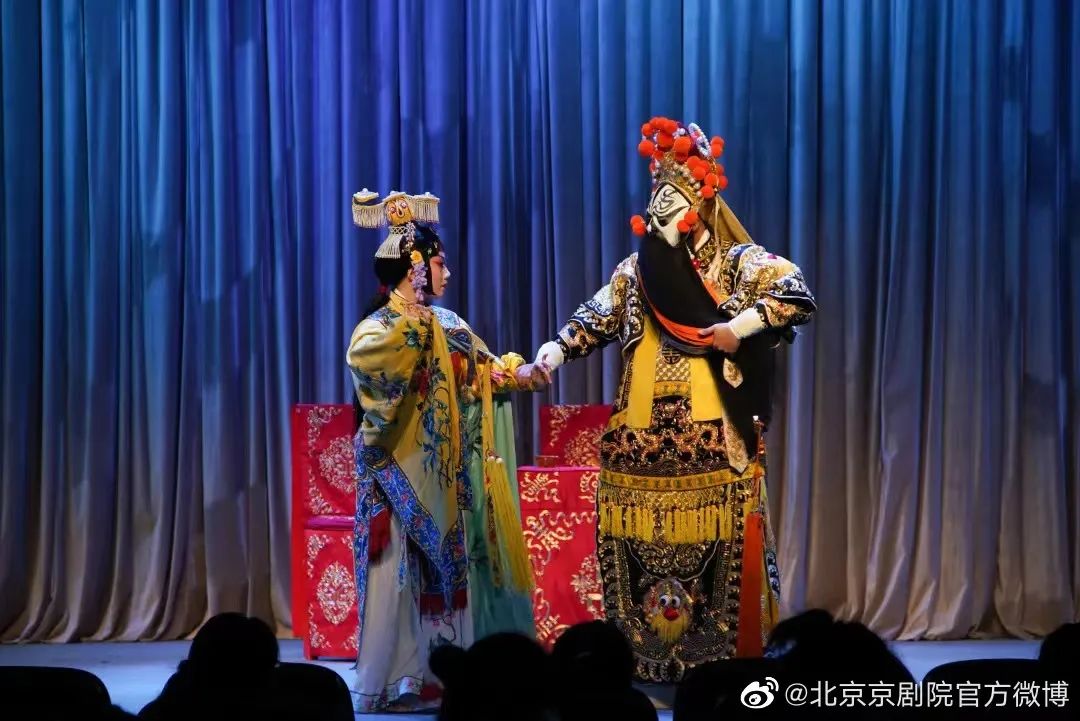
《霸王别姬》剧照
A still from Farewell My Concubine
京剧唱腔音乐的显著特征是以皮黄腔系统为代表。它以一种基本的曲调为基础,运用快减慢繁的变奏手法,通过节拍、节奏、速度、旋法、调式等方面的变化,形成一系列不同的板式。每一种节拍特点的板式又可分为更多类型。选用不同的板式来表达唱腔内容的变化,表现不同节奏的功能。以反映人物的思想感情。达到用音乐刻画、塑造人物形象的目的。
A striking feature of Beijing Opera is the Pi-Huang singing system. Based on a basic tune, it applies a variation technique, reducing the details when the rhythm is fast and adding them when slow, in order to create a series of different singing patterns through the changes in beat, rhythm, tempo and tune. Each of the patterns can be further categorized into various genres according to their rhythmic modes. Artists employ different singing styles with varying functions and rhythms to express the emotions and feelings of characters, so as to portray and shape the images of different characters with music.
京剧的两大腔调
Two Major Tunes of Beijing Opera
西皮
Xipi
起源:“西皮腔”是由明末清初秦腔经湖北襄阳传到武昌、汉口一带,同当地民间曲调结合演变而成,其旋律高亢激昂,具有明显的北方特点。
Origin: Xipi is a tune originating from the singing style of Shaanxi Opera as it combined with local folk tunes when introduced from Xiangyang to Wuchang and Hankou, Hubei Province, in the late Ming Dynasty (1368-1644) and the early Qing Dynasty (1644-1911). It features loud and sonorous melodies, with a distinctive flavor of northern China.
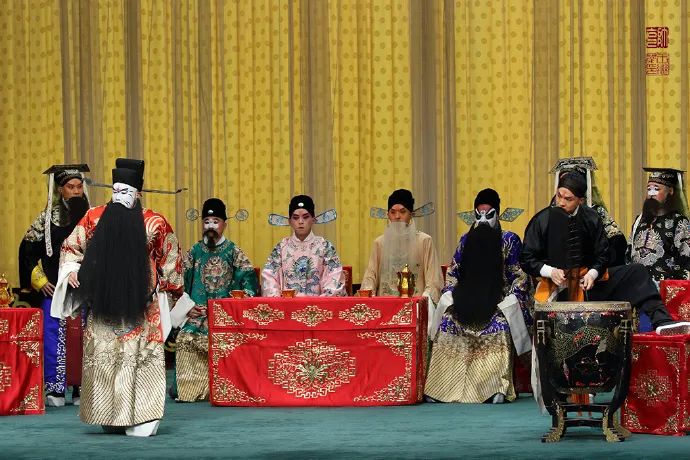
《击鼓骂曹》剧照
A still from Beat the Drum to Scold Cao Cao
特点:由于“西皮”跳进音程较多,整体音区偏高,其调式多以“宫”调式为主,因此,其旋律色调明亮、华丽、尖锐,用平缓节奏处理时,多表现明快、抒情的喜剧情节和愉悦的人物情绪;用轻快或强劲节奏处理时,多表现热烈、激烈的戏剧场面和活泼、激动的人物情绪。
Characteristics: Due to its more leaps in pitch intervals and relatively high registers, Xipi mainly features the“Gong”tune. Therefore, its rhythms are bright, gorgeous and sharp. When employing slow rhythms, it is often used to depict comedic plots and expresses joyful feelings; when employing fast or strong rhythms, it is often used to depict dramatic scenes and expresses lively, excited feelings.
节奏:“西皮”的入唱位置在弱拍(如2/4节拍时,在弱拍入唱;4/4节拍时,在次强拍入唱)。由于是弱拍入唱,且强弱关系时而模糊又时而清晰,增强了节奏的不稳定感和旋律的流动感,因此,西皮唱腔总是给人以婉转流畅如行云流水之感。
Rhythms: Xipi usually starts with unaccented beats (for instance, it begins with a weak beat in a 2/4 beat, and with a subsidiary strong beat in a 4/4 beat ). In addition, the changes between weak and strong beats are sometimes distinct and sometimes not, enhancing the instability of the rhythm and fluidity of melody. For this reason, Xipi always sounds fluent and smooth, like floating clouds and flowing water.
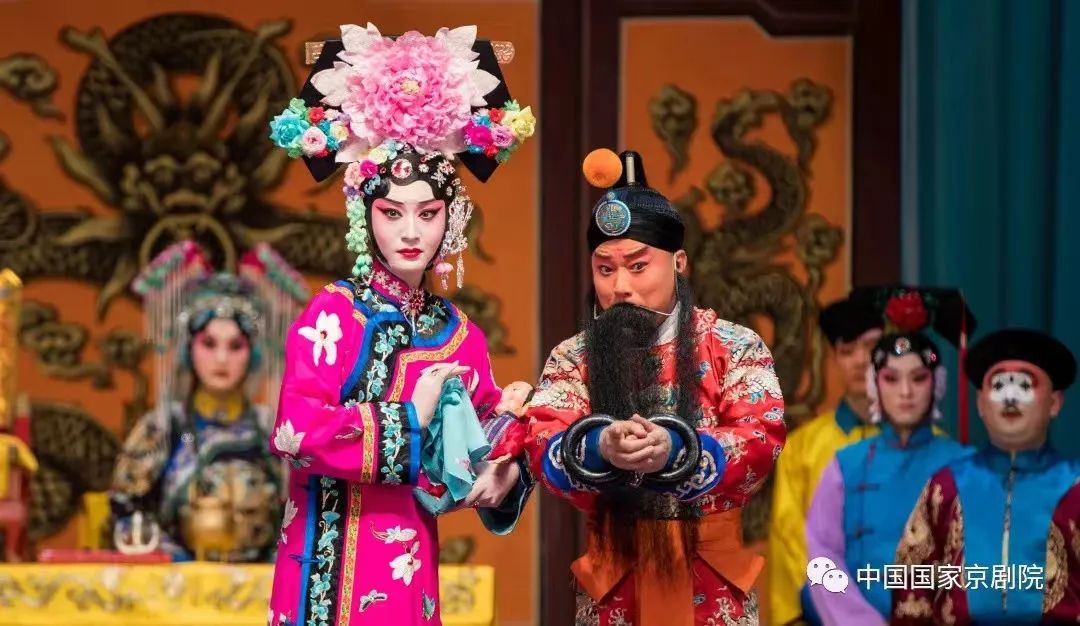
《四郎探母》剧照
A still from Yang Silang Visits His Mother
常见剧目:西皮在常见剧目中,有 《四郎探母》 ,杨延辉唱的“未开言不由人泪流满面”就是老生的“西皮倒板”。《击鼓骂曹》是京剧老生传统剧目,全剧唱腔都是“西皮”,板式全面,反映三个不同的内容和思想,使人不觉重复。
Representative plays: Representative plays adopting Xipi include Yang Silang Visits His Mother. The line“I cannot help bursting into tears before I say a word”, sung by the character Yang Yanhui, a laosheng (old male character) in the play, features a typical Xipi singing style. A traditional laosheng Beijing Opera play, Beat the Drum to Scold Cao Cao adopts Xipi from beginning to end. It uses different modes of Xipi to reflect the different plots and connotations in three acts and to avoid repetition.
二黄
Erhuang
起源:“二黄腔”的起源有两种说法。一说源于江西的宜黄腔;一说源于徽调。无论它源于宜黄腔还是徽调总之都是南方剧种,所以其南方音乐特色较为突出,是一种比较柔和、稳重、深沉善于抒情的腔调。
Origin: There are two theories about the origin of the melody Erhuang: one holds that it originated from the Yihuang Tune in Jiangxi, and the other holds that it originated from the Anhui Tune. Either way it is a traditional opera genre of southern China, presenting prominent features of southern Chinese music like softness, profoundness, and lyricism.
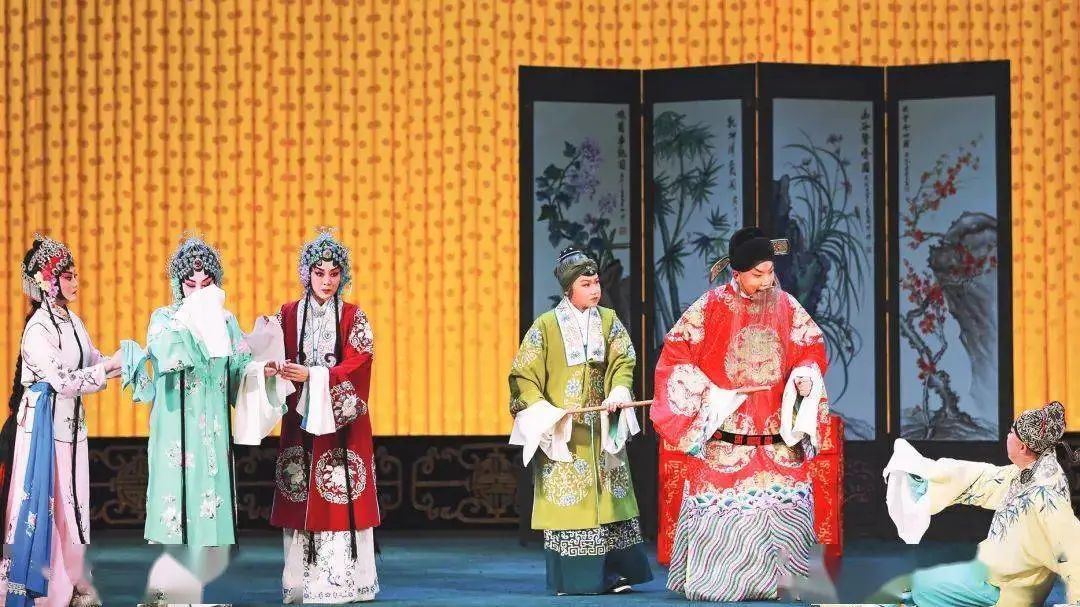
《碧玉簪》剧照
A still from The Emerald Hairpin
特点:“二黄”以级进音程为主,整体音区偏低,其调式多以“商”调式为主,其旋律的色调暗淡、凝重、平静,节奏缓慢时,多用来表现压抑的悲剧情节和忧郁的人物情绪;节奏强劲时,多表现压抑、悲壮的戏剧场面和凄楚、悲愤的人物情绪。
Characteristics: Erhuang mainly features progressive pitch intervals and relatively low registers. With the“Shang”tune as the basic tune, it has gloomy, heavy, peaceful melodies. When slow rhythms are employed, it is often used to portray tragic plots and express depressed feelings; when strong rhythms are employed, it is often used to depict depressive, tragic dramatic scenes and express emotions such as sorrow and anger.
节奏:“二黄”的入唱位置在强拍(任何节拍均如此)。由于是强拍入唱,强弱关系比较明确,节奏扎实、稳定,增强了旋律的凝重感和力度感,因此,二黄唱腔总是给人以沉静、悲凉之感。
Rhythms: Erhuang starts with strong beats in any case. For this reason, it features distinct comparison between weak and strong beats and boasts heavy and stable rhythms, making it sound solemn and powerful. Therefore, Erhuang creates a tranquil, sad atmosphere.
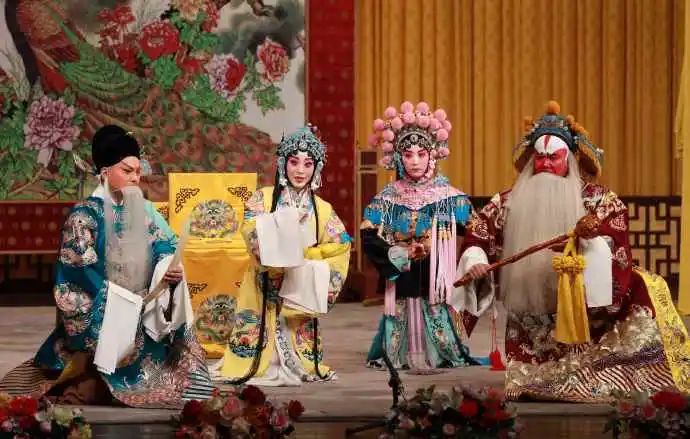
《二进宫》剧照
A still from Enter the Palace Twice
常见剧目:《碧玉簪》“无端巧计将人来陷”是程派演唱风格的旦角二黄慢板;《二进宫》三人跪地联唱二黄原板“怀抱着”,尤为费力。演唱步步紧接,声声入彀,非常动听,非具大魄力者不辨。盖音节虽促,而声量仍须暇逸。
Representative plays: The line“Set someone up with tricks”sung by a female character in The Emerald Hairpin adopts the Erhuang singing style of the Cheng School of Beijing Opera; the lines "Enter the Palace Twice" sung by three characters on their knees in Erhuang is particularly difficult to sing. The singing is melodic and powerful. Despite its quick rhythms, it still sounds carefree and easygoing.
京剧其他唱腔
Other Singing Styles of Beijing Opera
在京剧唱腔漫长的发展历程中,其声腔不仅派生了反调“西皮”和反调“二黄”,还吸收了一些其他地方剧种腔调,如南梆子、四平调、高拨子、娃娃调、汉调等。由于这些外来腔调在保持其原有结构和调性特点外,其旋律风格都不同程度地与“西皮”、“二黄”相近或相融,特别是胡琴的定弦和把位上分别相同于“皮黄”,故习惯地把这些强调分别归入“皮黄”列之中,如西皮南梆子、西皮娃娃调、二黄四平调、二黄汉调等。
Over time, Beijing Opera has not only developed reversed Xipi and Erhuang, but also incorporated the singing styles of other regional traditional operas such as Nanbangzi, Sipingdiao, Gaobozi, Wawadiao, and Handiao. While maintaining their original structures and tunes, those exotic singing styles are similar to or integrated into Xipi and Erhuang to various degrees. In particular, the pitch and position of huqin (Chinese fiddle) they use are the same as Xipi and Erhuang. So, they are habitually categorized into the Pi-Huang singing system, such as Xipi Nanbangzi, Xipi Wawadiao, Erhuang Sipingdiao, and Erhuang Handiao.