京城探馆 | 景山:俯瞰京城全貌的绝佳观赏点
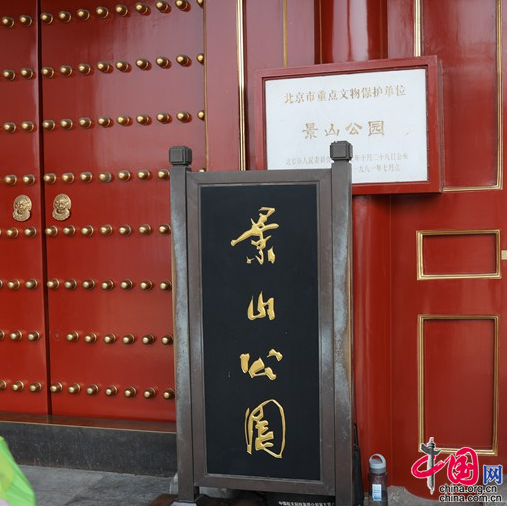
景山公园
Jingshan Park
(Prospect Hill Park)
俯瞰京城全貌的绝佳观赏点
A Fantastic Viewpoint to Overlook the City of Beijing
景山公园位于北京城南北中轴线的中心点上,南依故宫,西靠北海,北与鼓楼遥遥相望,曾是北京城中心的最高点。
In the middle of the north-south central axis of Beijing lies the Jingshan Park, one of the most sought-after parks in the city. Adjacent to the Forbidden City to the south, the Beihai Park to the west and the Drum Tower to the north, the Jingshan Park was once the highest point in the center of Beijing, which offers a fantastic panoramic view of the Chinese capital.
景山公园概览
Introduction of the Jingshan Park
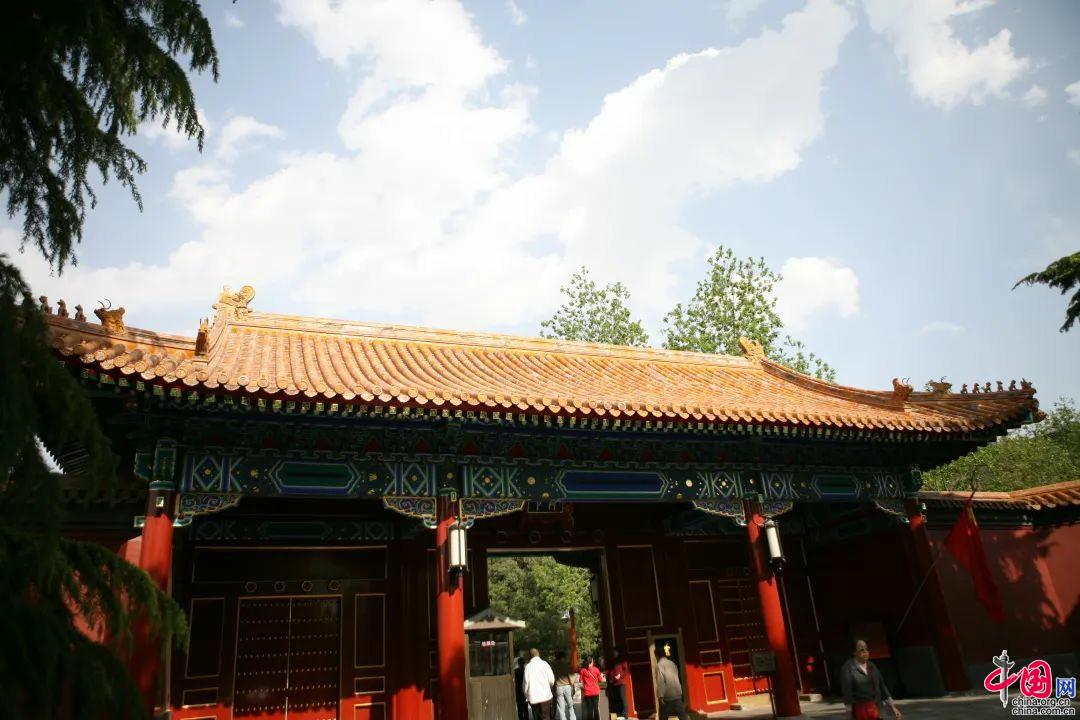
景山始建于金大定十九年(公元1179年),是元、明、清三代的皇宫后苑。
Dating back to the Jin Dynasty, the Jingshan hill was fortified in 1179, the nineteenth year since the fifth emperor of the Jin Dynasty, Emperor Shizong, came into power. As a garden of the imperial palace in the Yuan, Ming and Qing Dynasties.
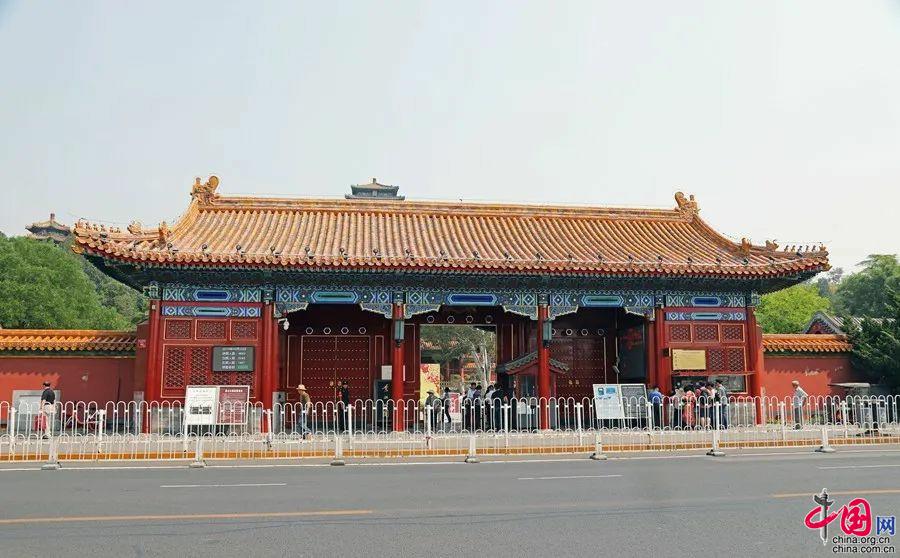
1928年开放,1957年被定为北京市重点文物保护单位,2001年被列为全国文物保护单位,被定为国家4A级景区,2005年被评为北京市“精品公园”。
Opened to the public in 1928, the park was designated as a major historical and cultural site protected at the municipal level in Beijing in 1957, and listed as a major historical and cultural site protected at the national level and a Class 4A tourist attraction in China in 2001. Also in 2005, the park was rated as one of the most beautiful parks in Beijing.
三座园门
Three Gates to the Park
万岁门 山左里门 山右里门
Wansui Gate, Shanzuoli Gate, Shanyouli Gate
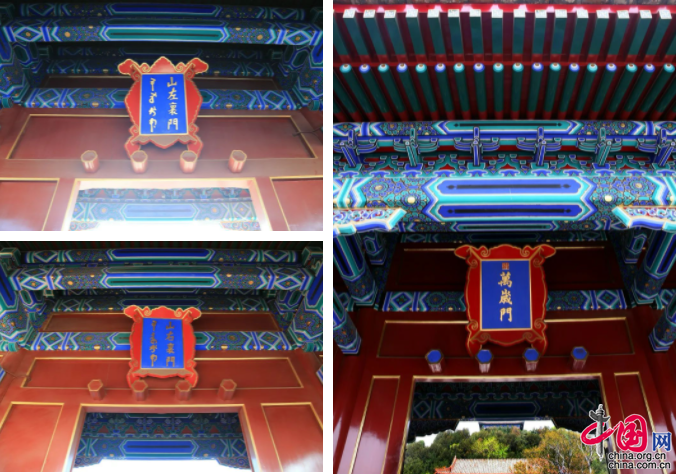
万岁门:位于北京故城垣中轴线上,坐北朝南,是公园的南门和正门。
山左里门:公园的东门,坐西朝东,黄琉璃筒瓦歇山顶。
山右里门:公园的西门,坐东朝西,形制与山左里门相同。
Wansui Gate: the main entrance of the park, facing south, located on the central axis of Beijing.
Shanzuoli Gate: the east gate with a hip-and-gable roof with yellow glazed imbrex.
Shanyouli Gate: the west gate with the same shape as the east one.
绮望楼
Qiwang Tower
(Tower with A Fascinating View)
京城最佳赏雪景点之一
A Perfect Viewpoint to Watch Snowfalls in the City of Beijing
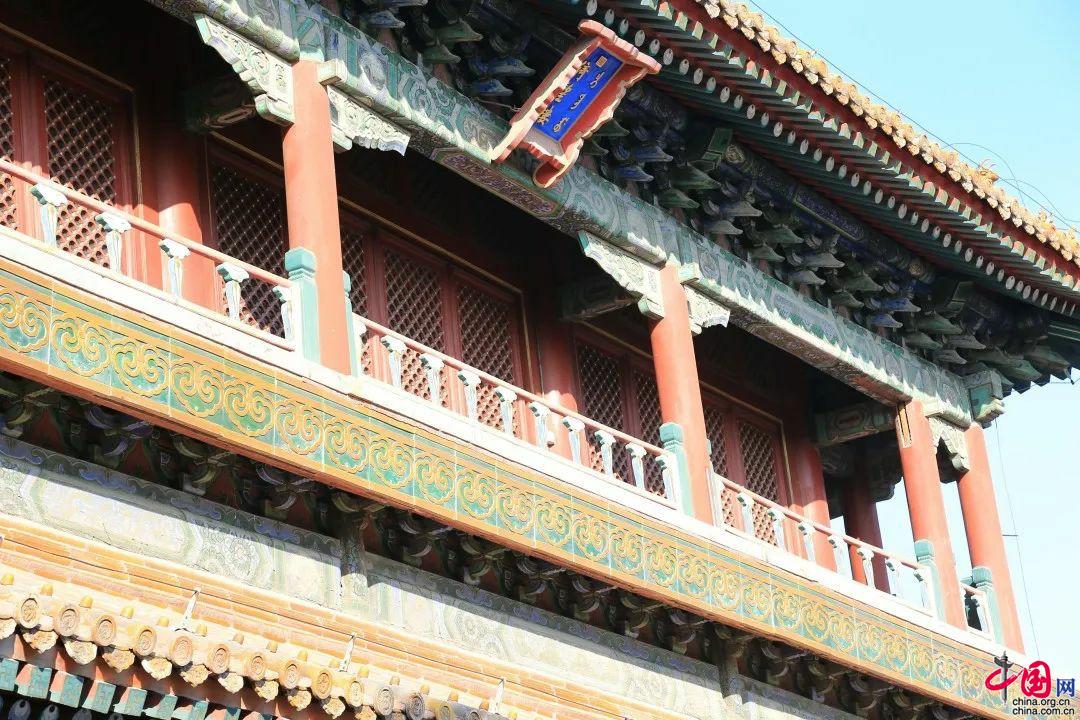

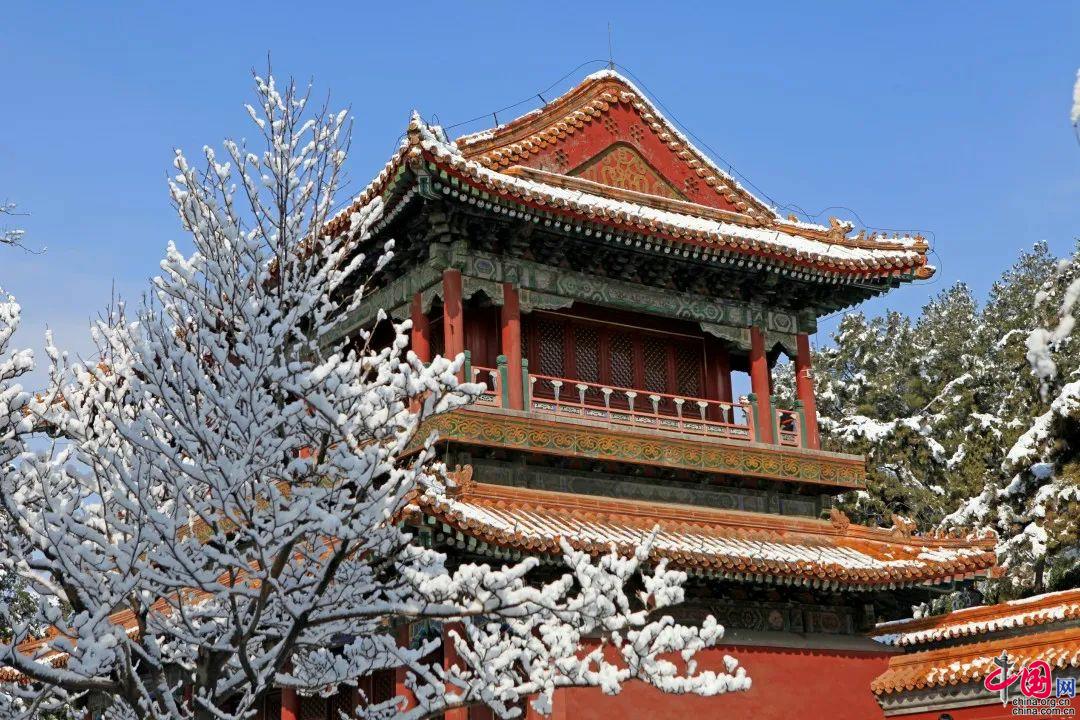

绮望楼建成于清代乾隆十五年(1750年),楼高15米宽20米,分上下两层。绮望楼内原供奉有孔子神位,为清代皇室祭奉孔子之处。
Built in 1750, the two-story tower is 15 meters high and 20 meters wide. The tower housed a spirit tablet for Confucius, a great Chinese philosopher who lived more than 2,500 years ago and to whom the royal family of the Qing Dynasty paid their tribute.
五方亭
Wufang Pavilions
(Five Pavilions on the Jingshan Hill)
周赏亭、观妙亭、万春亭、辑芳亭、富览亭
Zhoushang pavilion, Guanmiao pavilion, Wanchun pavilion, Jifang pavilion and Fulanpavilion
清乾隆年间,景山五峰各建了一座琉璃亭(五方亭),各供奉一位代表酸、苦、甘、辛、咸五味神灵的铜佛。1900年八国联军入侵时,万春亭中的毗卢遮那佛被毁,其余四尊都被劫走。
五方亭从东向西依次为周赏亭、观妙亭、万春亭、辑芳亭、富览亭。
Wufang Pavilions refer to the five pavilions in the Jingshan Park. During the reign of Emperor Qianlong in the Qing Dynasty (1736-1796), a glazed pavilion was built on each of the five peaks of the Jingshan Hill, each enshrining a bronze Buddha statue symbolizing good qualities. However, the Vairocana statue in the Wanchun Pavilion was destroyed by the Eight-Nation Alliance forces when they invaded Beijing in 1900, while the other four were looted.
From east to west, the five pavilions are named Zhoushang, Guanmiao, Wanchun, Jifang and Fulan.
周赏亭
Zhoushang Pavilion
(All Round View Pavilion)
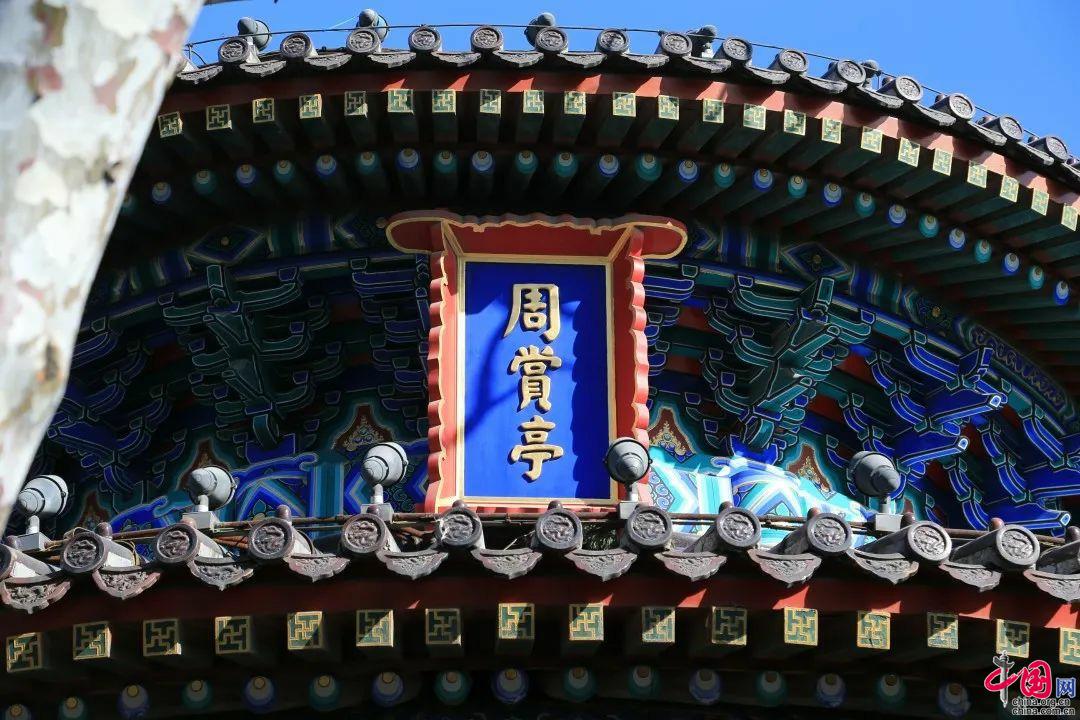
周赏亭与山西侧的富亭相对而建,是在明代建筑的基础上于清乾隆十五年(1750年)兴建的。周赏亭为孔雀蓝琉璃瓦覆顶,紫晶色琉璃瓦剪边,重檐攒尖的圆形古亭。
周赏亭内原供奉五方佛之一的宝生佛,为铸铜镭金佛像。
Zhoushang Pavilion, All Round View Pavilion was built symmetrically to Fulan Pavilion, the Eye Feasting Pavilion on the western side of the hill. The architectural structure and painted pavilions are completely alike with that or the Eye Feasting Pavilion. Put up in 1750 on an ancient building site of the previous dynasty, the pavilion was roofed with malachite glazed tiles and rimmed off with amethyst glazed tiles. It is an ancient circular pavilion having a cusped top with double eaves.
Consecrated originally in the pavilion was a Buddha of Happiness and virtue, known in Chinese as Baosheng Fo.
观妙亭
Guanmiao Pavilion
(Wonder Appreciation Pavilion)
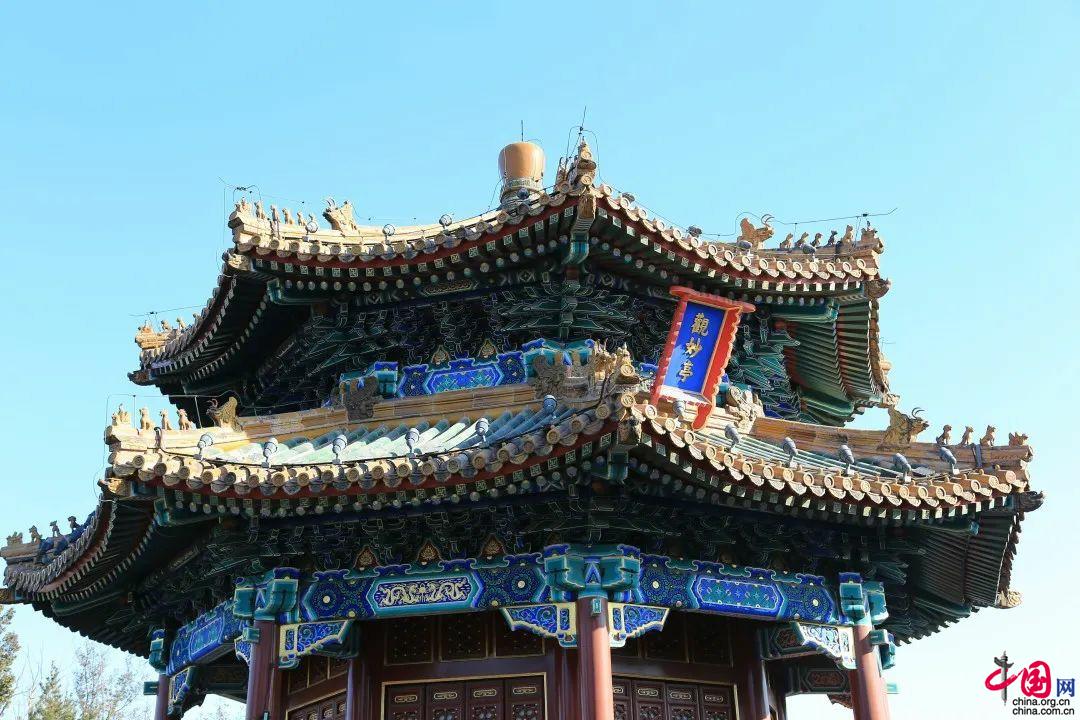
观妙亭与山西侧的辑芳亭相对而建,其建筑形式和彩绘完全相同。观妙亭为翡翠绿琉璃瓦覆顶,黄琉璃瓦剪边,重檐、八角、攒尖古亭。
观妙亭内原供奉五方佛之一的阿開佛,为铸铜金佛像。
Guanmiao Pavilion, the Wonder Appreciation Pavilion was built symmetrically with Jifang pavilion, the Pavilion of Fragrance Gathering on the west of the hill. They look all alike both in architectural structure and colored paintings. The Guanmiao Pavilion was covered up with a glazed-tile roof of jasper color and yellow rims, it is an octagonal pavilion with a cusped top and double eaves.
Enshrined originally in the pavilion was Buddha Aksobhya,one of the Buddhas of Five Directions.
万春亭
Wanchun Pavilion
(All Time Spring Pavilion)

清乾隆十五年(1750年)在原建筑的基础上建万春亭。万春亭高17.4米,内外共32根金柱,三层重檐,四角攒尖顶,上覆金色琉璃瓦绿剪边,建筑面积为530平方米。
万春亭内供奉着“毗卢遮那佛”,意译为“光明普照”。毗卢遮那佛与万春亭东西两侧四座亭子中供奉的佛像,共同被称为“五方佛”。
The Wanchun Pavilion was renovated on the basis of the original structure in 1750 under the reign of Emperor Qianlong of the Qing Dynasty. The 17.4-meter-high building features 32 golden pillars inside and outside, a three-tiered and four-ridged pyramid roof, which is decorated with golden glazed tiles with green rims. The pavilion covers an area of 530 square meters.
The pavilion enshrines the statue of Vairocana, one of the Buddhas of Five Directions, which means “let the light shine everywhere”.
富览亭
Fulan Pavilion
(Eye Feasting Pavilion)
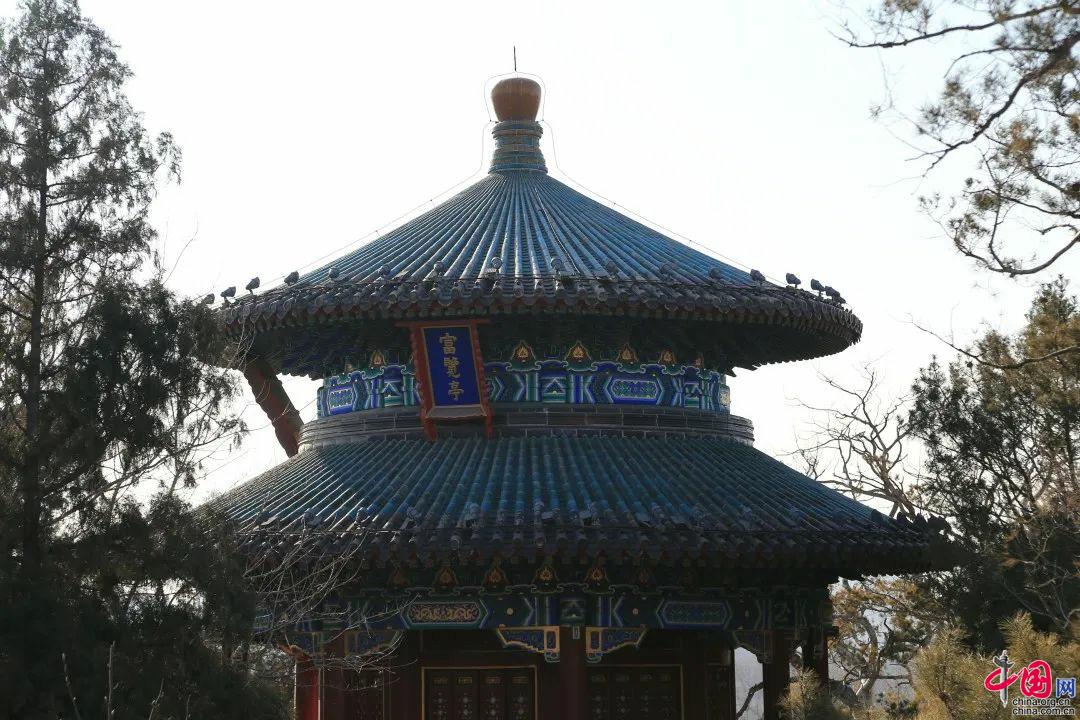
富览亭为景山五方亭之一,与山东侧的周赏亭相对而建,其建筑形式和彩绘完全相同。富览亭为孔雀蓝琉璃瓦覆顶,紫晶色琉璃瓦剪边,是重檐攒尖的圆形古亭。
富览亭内原供奉五方佛之一的不空成就佛,为铸铜锱金佛像。
Fulan Pavilion,one of the pavilions of five directions, was built as a counterpart to Zhoushang Pavlion, the All Round View Pavilion and they look all alike in architectural shaping and colored paintings.It is covered up with a double-eaved roof of blue malachite glazed tiles but rimmed with that of amethyst ones.
Formery made sitting in the pavilion was a Buddha known as Amoghavajra of Accomplishment which was cast of copper.
辑芳亭
Jifang Pavilion
(Pavilion of Gathering Fragrance)
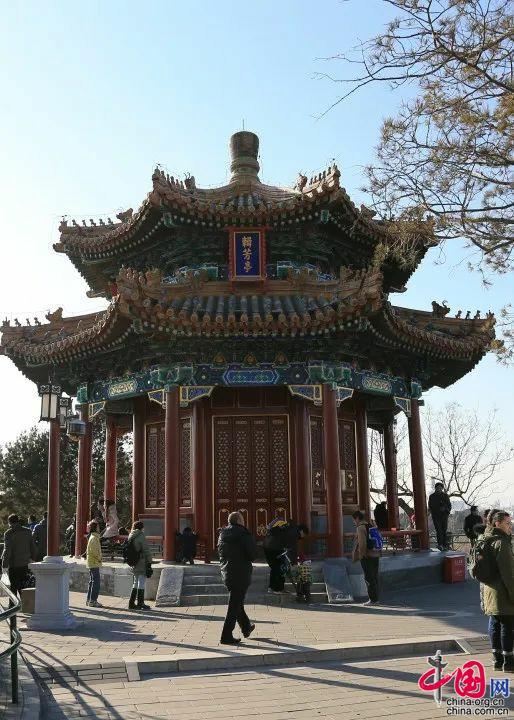
辑芳亭为景山五方亭之一,与山东侧的观妙亭相对而建,其建筑形式和彩绘完全相同。辑芳亭为翡翠绿琉璃瓦覆顶剪黄边,是重檐八角攒尖古亭。
辑芳亭内原供奉五方佛之一的阿弥陀佛,为铸铜阔金佛像。
Jifang Pavilion, Pavilion of Gathering Fragrance, one of the pavilions of five directions, was built symmetrically to Guanmiao Pavilion, the Wonder Appreciation Pavilion on the east of the hill and they are all alike in architectural structure and colored paintings. Covered up with glazed tiles of jadeite color and yellow rims,it is an octagonal ancient pavilion of double-eaves with a cusped top.
Enshrined formerly in the pavilion was an Amitabha Buddha, one of the Buddhas of Five Directions cast of copper.
护国忠义庙
Temple for State Protection and Loyalty
主殿为两连房,黄琉璃瓦覆顶,龙凤和玺彩绘
The main hall has two connecting rooms with
a yellow glazed tile roof and colored dragon-phoenix patterns

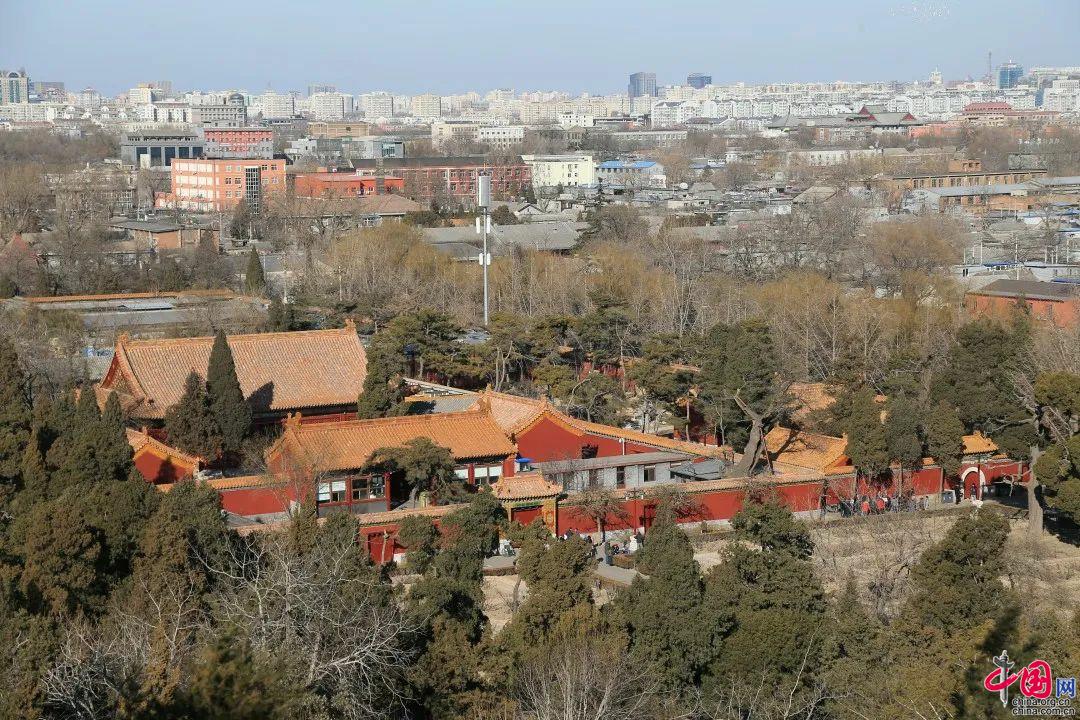
护国忠义庙为供奉武圣关公而设立。殿内供奉关帝骑马握刀铸铜圣像一尊,左右配从神六尊,在这里供奉关帝圣像,是为了赞扬和提倡忠勇神武、丹心取义和亮节成仁的精神,大殿正中原悬有清·圣祖康熙皇帝题"忠义”匾额。
The Temple for Sate Protection and Loyalty was built for Guan Yu, the Lord of War. Enshrined in the hall was a statue of Guan Yu sword in hang on his steed with six statues on both sides to keep him in company. Why the Lord Guan was enshrined here was meant for eulogizing military prowess, advocating loyalty and self-sacrifice with a loyal heart and brotherhood towards one's own county. Hung above in the center of the hall there used to have a horizontal board “Loyalty and Justice" which was handwritten by Shengzu, Emperor Kangxi of the Qing Dynasty.
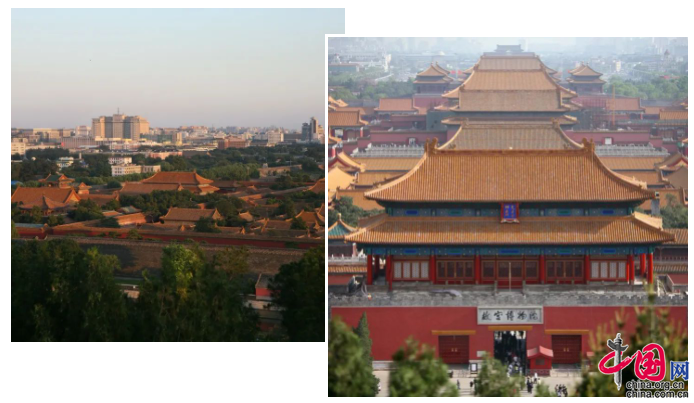
景山公园内古树参天,山峰独秀,殿宇巍峨。上五亭横列,中锋万春亭坐落于北京城中轴线制高点,尽享天时地利。
登临其上,可俯瞰故宫全景,一览京城轴线,领略整齐对称的布局神韵,品读气势恢宏的宫廷建筑。
The Jingshan Park boasts a magnificent view of towering old trees, rolling hills and imposing temples and pavilions. The Wanchun Pavilion at the center, the highest point on the central axis of Beijing, offers the best view at the prime location.
On the pavilion, one can have a bird’s eye view of the Forbidden City, as well as everything on the axis of the Chinese capital, and appreciate the magnificent symmetrical aesthetics of the palace architecture.