胡同文化 | 杨梅竹斜街:古今文艺青年最爱逛的“网红胡同”

图片来源于网络,如有侵权立即删除
探秘胡同深处的京味文化
Explore Beijing culture hidden in hutongs
胡同是什么?大大小小的四合院相互挨着,排列在两侧街道上, 它们之间的留出的通道就是胡同。胡同也可以说是一种古老的城市小巷。千百年来,胡同与北京的发展紧密相关,也是北京历史文化演绎发展的缩影,这里不仅集合了中华古都文化、红色文化、京味文化,而且凝结了北京特有的文化精神与气韵。随意漫步在任何一条胡同上,都能感受到古老的历史气息。每一砖每一瓦都是人们生活的印记。
What are hutongs? Old lanes and alleys between interconnected Siheyuan (traditional quadrangles) residences lining the streets are called hutongs. Over centuries, hutongs are closely associated with Beijing’s development as witnesses of the evolution of the city’s history and culture. They not only combine ancient capital culture, revolutionary culture and traditional Beijing culture, but also concentrate the city’s distinctive cultural spirit and flair. Roaming down any lane, one can feel the strong historical atmosphere of Beijing. Every brick or tile carries memories of people’s lives.
杨梅竹斜街
Yangmeizhu Xiejie
图片来源于网络,如有侵权请联系删除
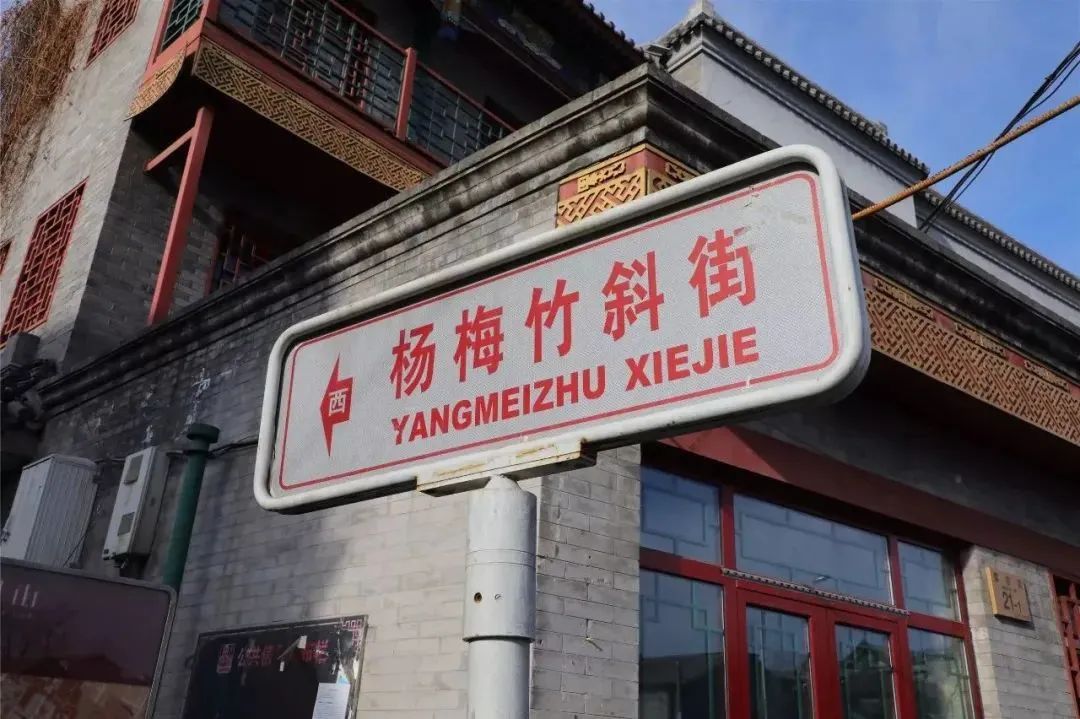
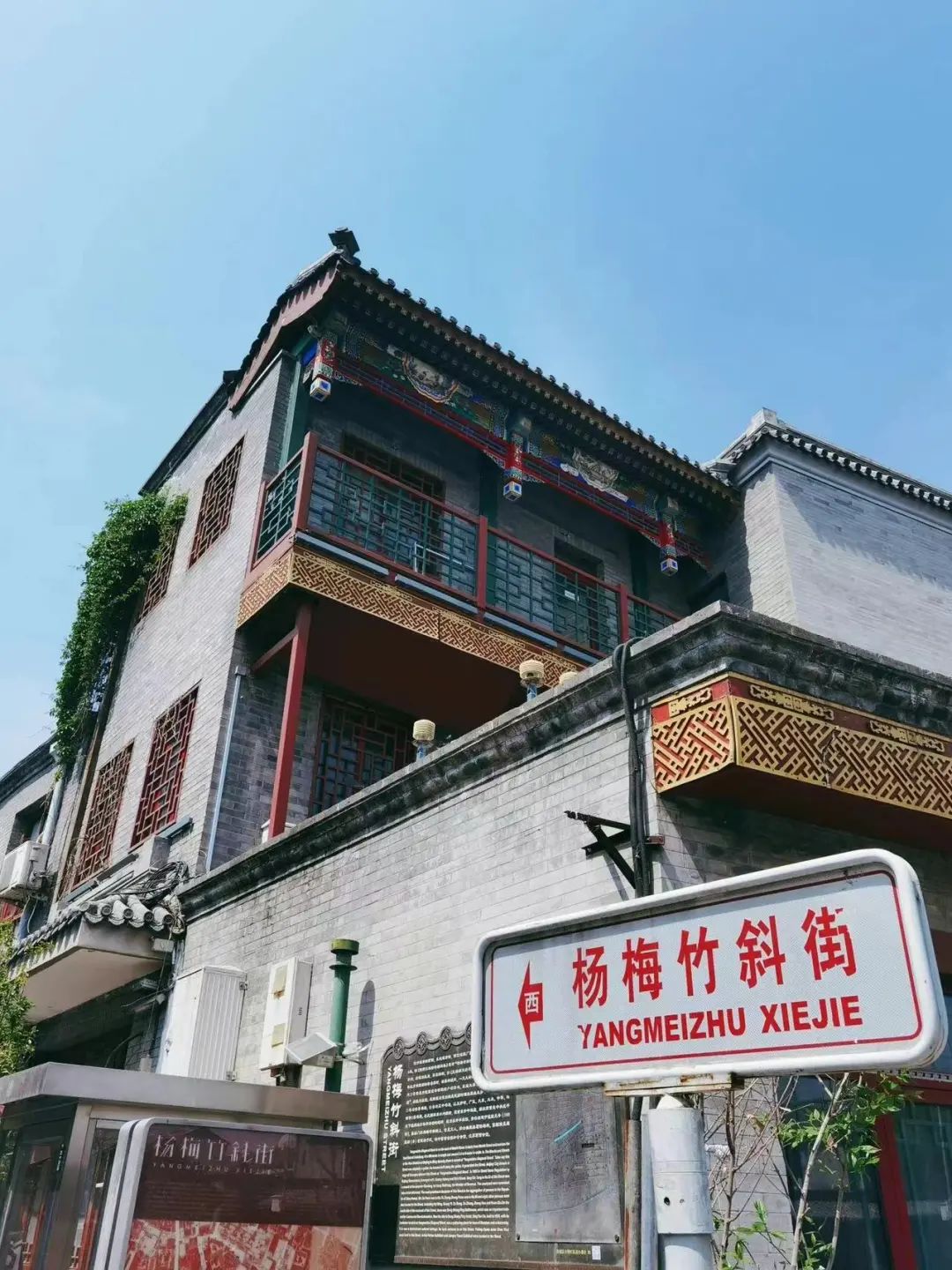
北京城的街道横平竖直,方方正正,呈棋盘形状分布,但其中有那么几个地方与众不同,展现着自己独特的风貌,杨梅竹斜街就是其中一个。杨梅竹斜街位于北京前门大栅栏地区,东起煤市街,西至延寿街,全长不到五百米。但是作为连接内外城交通的街道,它连接着大栅栏和琉璃厂东街,特别是在民国时期尤为繁盛,甚至被称为“龙脉交通辐辏之地”。
The streets and lanes in Beijing are straight horizontally or vertically, forming a chessboard-like layout. Some stand out for their unique looks, including Yangmeizhu Xiejie. Situated at Dashilan in Qianmen, Beijing, Yangmeizhu Xiejie is a street extending less than 500 meters westwards from Meishi Street to Yanshou Street. An avenue linking the Inner City and Out City of old Beijing, it connects Dashilan with Liulichang East Street. The area was particularly bustling in the Republic of China period (1912-1949), hence its nickname “the traffic hub of the dragon vein”.


图片来源于网络,如有侵权立即删除
杨梅竹斜街的名字看起来极具文艺范儿,但是来历其实和“杨”、“梅”、“竹”没什么关系。在清朝乾隆十五年(1750年)的《京城全图》中,这个地方被标注为“杨媒斜街”。据说是因为清朝前期这条斜街居住着一位巧舌如簧,善于说媒的杨姓媒婆,由此得名。后在清朝光绪年间,将其谐音加字雅化成为了如今的“杨梅竹斜街”。
杨梅竹斜街充满了人间烟火气,曾有很多书局、会馆、娱乐场所汇集,是一条妥妥的商业、文化和实景生活并存的街巷。
Despite its poetic name, Yangmeizhu Xiejie (literally, “Oblique Street of Polar, Plum and Bamboo”) has nothing to do with polar, plum or bamboo. In the Map of the Entire Capital dating back to 1750, the 15th year during Emperor Qianlong’s reign of the Qing Dynasty, the street is marked with an alternative name that derived from a well-known matchmaker living here. Later, in the reign of Emperor Guangxu, the street got its today’s name, which sounds more elegant.
Yangmeizhu Xiejie boasts a heavy breath of life. There were once countless bookstores, guild halls, and entertainment places, making it a street integrating commerce, culture and daily life.
书局•文艺青年的聚集地
Book Shops
Gathering Places for Young Literature Lovers
图片来源于网络,如有侵权立即删除
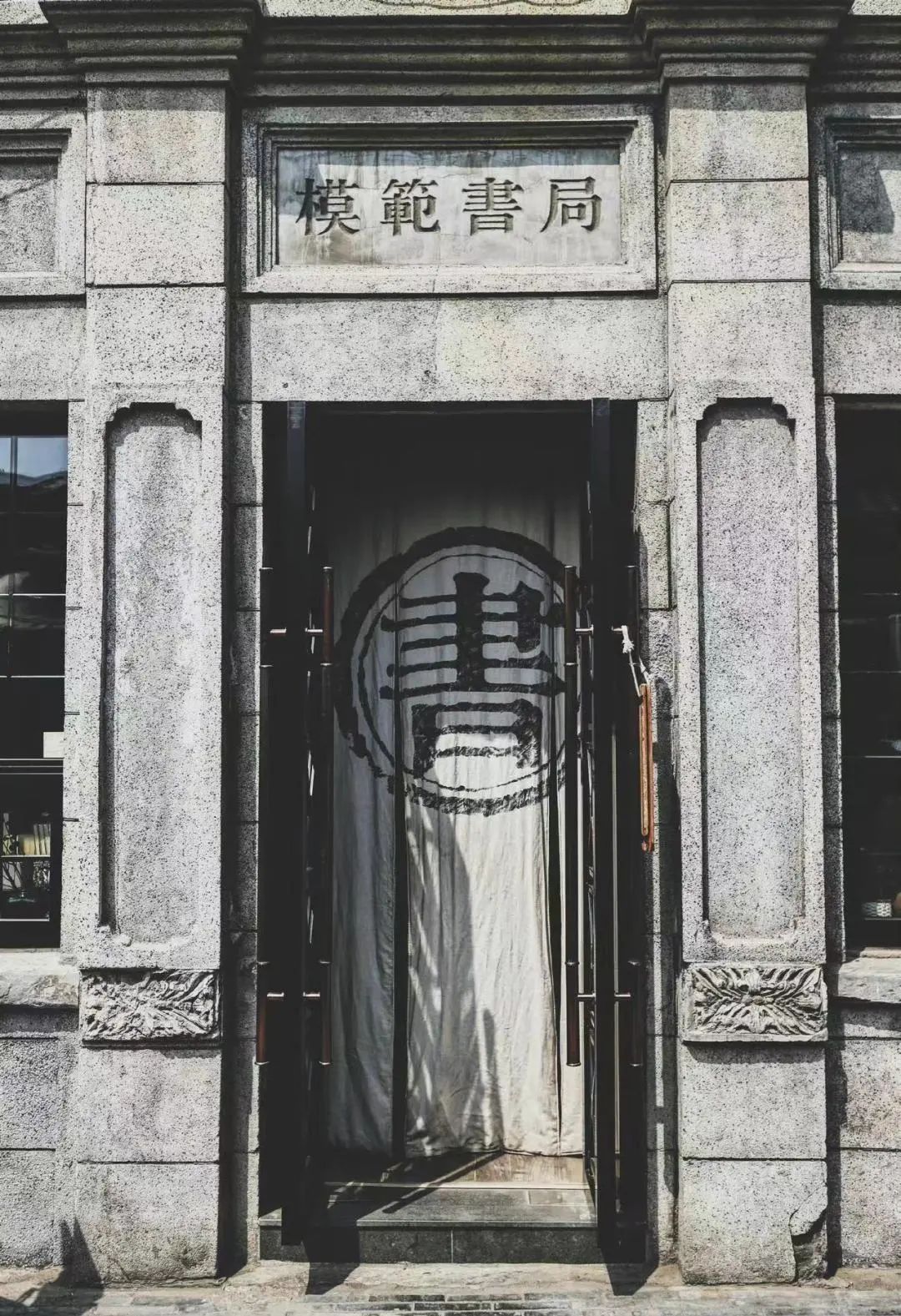
民国时期很多著名的书局都开设在斜街上,比如世界书局、中正书局、开明书局、广益书局、环球书局、大众书局、中华印书局等,大量的进步书刊、外文书籍在这里出版,因此这里的“纸墨香气”十分浓厚,也吸引了“文艺青年”。
Back to the Republic of China period, the street was home to many famous book shops, such as World Bookstore, Chung Cheng Book Shop, Kaiming Bookstore, Guangyi Book Company, Global Bookstore, Public Bookstore, and Zhonghua Book Company. They published a number of progressive books and foreign-language books. Therefore, the cultural atmosphere of the area attracted many young literature lovers.
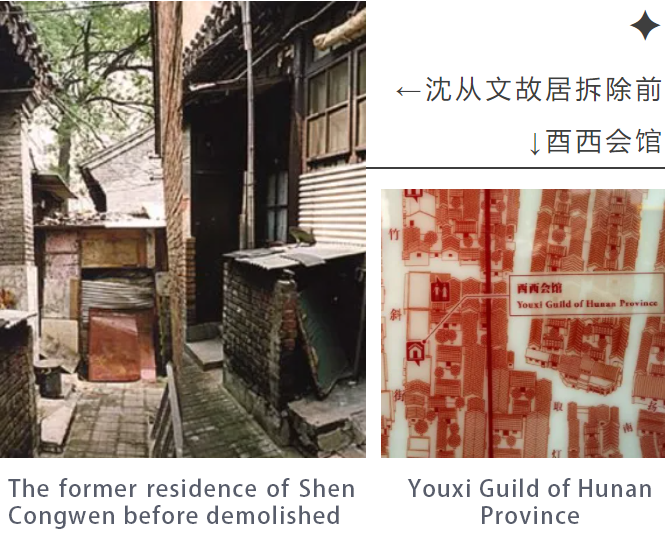
现代文学家沈从文也曾住在这里,并且在杨梅竹斜街上的酉西会馆里写出了闻名于世的《边城》《长河》《湘西散记》等巨作。街边上还有湖笔大师戴月轩的故居、京剧武生杨小楼故居、评剧演员新凤霞故居等等。
Shen Congwen, a famous writer in modern China, once lived here. He wrote such well-known literary masterpieces as The Border Town, The Long River, and Recollections of West Hunan in the Youxi Guild Hall in Yangmeizhu Xiejie. Lining the street are also former residences of Huzhou brush pen master Dai Yuexuan, famous Peking Opera artist Yang Xiaolou, and renowned Pingju Opera artist Xin Fengxia.
青云阁•老北京四大商场之一
Qingyunge
One of the Four Major Markets in Old Beijing
图片来源于网络,如有侵权立即删除
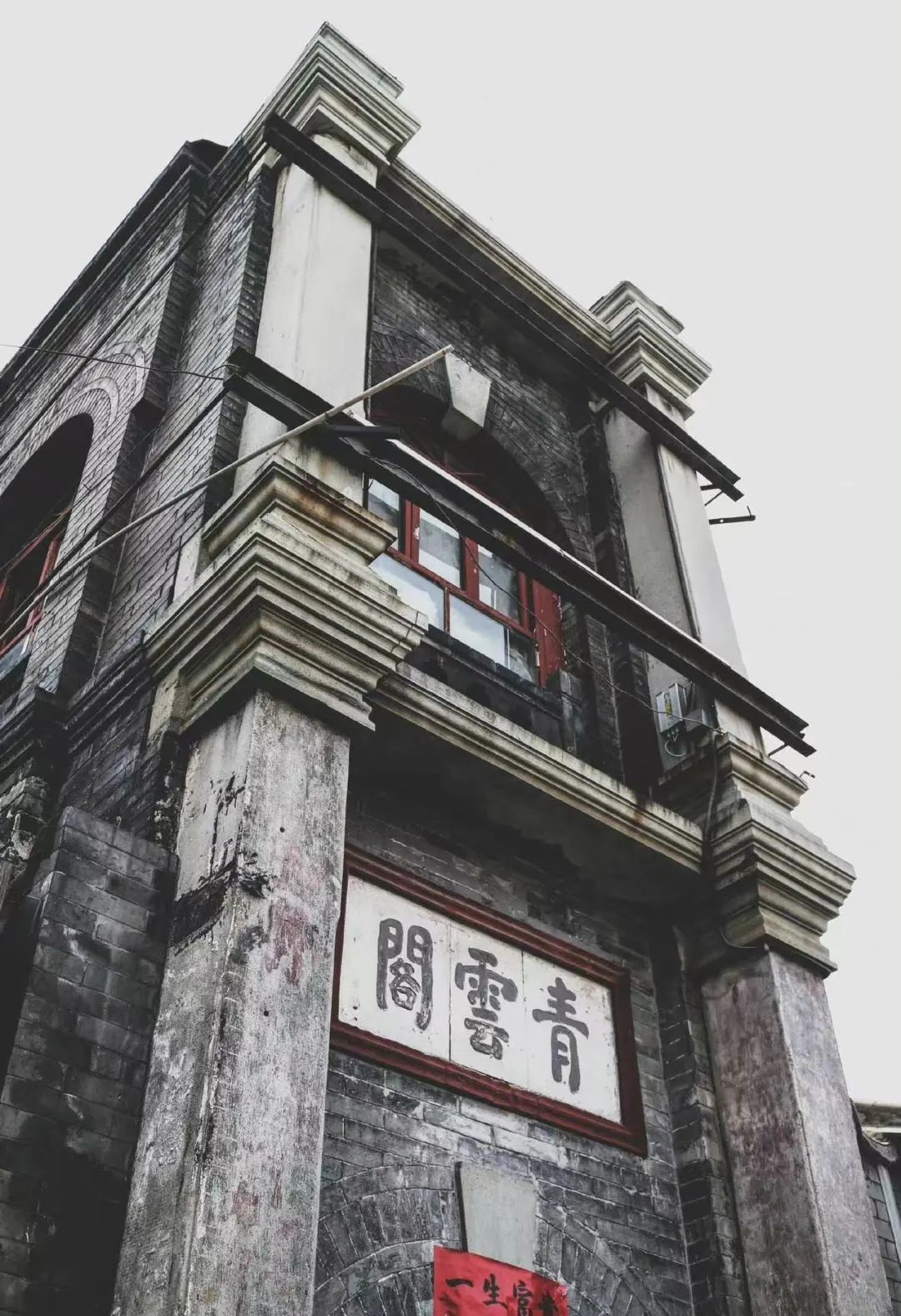
杨梅竹斜街上还有一家非常著名的“青云阁”,它是清末民初北京四大商场之一。青云阁是一座综合型的商业娱乐场所,内外装修也偏于西洋式风格。楼下百货日杂,楼上酒馆茶社,包含了茶座、小型演出、时兴百货等业态,成为了清末民初北京最著名的社交娱乐场所之一,有诸多名人雅士都来此聚会交谈。
因此,在清末时期便有文人许愈初在《肃肃馆诗集》中留下来了“迤逦青云阁,喧腾估客过。珠光争闪烁,骨董几摩挛。栋栋书坊满,家家相士多。居然好风景,堪唱太平歌。”的诗句来描写当时的青云阁繁华景象。
Yangmeizhu Xiejie was home to Qingyunge, one of the four most famous markets in Beijing during the late Qing Dynasty and the early Republic of China period. A commercial and entertainment establishment, Qingyunge boasted a European-style decorative style both inside and outside. The first floor was a department store, while the second floor served as a restaurant and teahouse. Qingyunge integrated businesses including teahouse, small-scale performance, and general merchandise retail, making it one of the most popular venues for socializing and entertainment in Beijing during the late Qing Dynasty and the early Republic of China period. Back then, many celebrities and men of letters gathered for parties here.
Xu Yuchu, a scholar in the late Qing Dynasty, wrote a poem depicting the bustling scenes of Qingyunge at that time, which was included in Poetry Collection of the Susu Pavilion: “The spectacular Qingyunge is always packed with customers; Jewels glisten with light, and antiques attract numerous collectors; Every bookshop is crowed with buyers, and every doorway is graced with fortunetellers; What a bustling scene! What a peaceful life !”
新杨梅竹斜街•文创先锋区
New Yangmeizhu Xiejie
A Pioneer in Cultural and Creative Industries
图片来源于网络,如有侵权立即删除
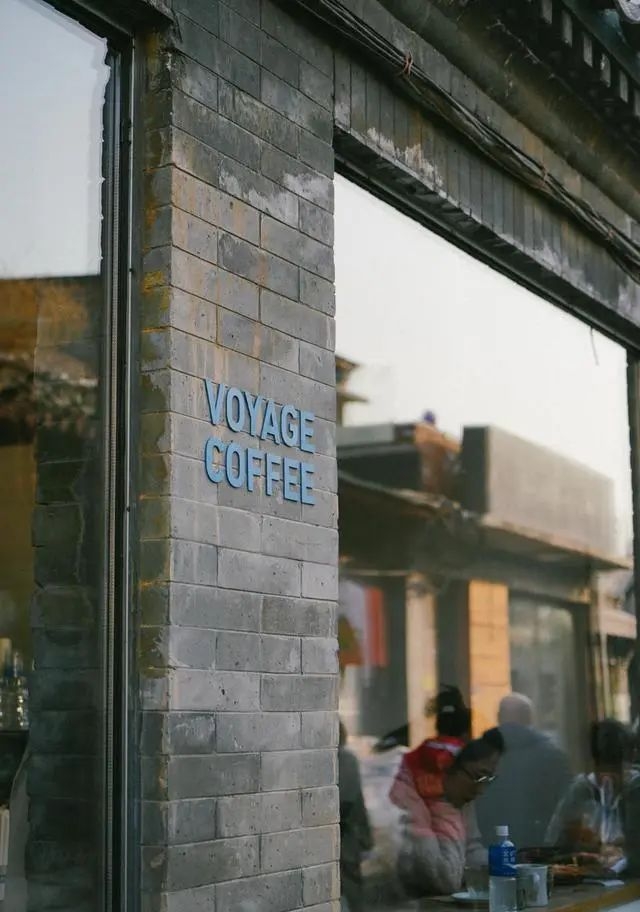
近年来,随着城市的规划变迁,杨梅竹斜街也不断进行着升级换代。在最大程度上保留了老胡同原生态韵味的同时,各式各样的文化创意机构、设计概念店开始入驻其中,整体带动了整个胡同成为了一块“文创先锋试验区”,吸引了很多游客来到这里拍照打卡,旅游休闲,成为了真正意义上的多元文化创意与商业相结合的典范。
In recent years, along with the urban construction of Beijing, Yangmeizhu Xiejie has been consistently upgraded. While preserving the old lane’s original look as much as possible, various types of cultural and creative institutions and boutique stores have settled here, turning the street into “an avant-garde pioneer in cultural and creative industries.” Numerous tourists come to take photos and relax themselves. The street has become a real sense of example in the combination of creativity and commerce.
图片来源于网络,如有侵权立即删除
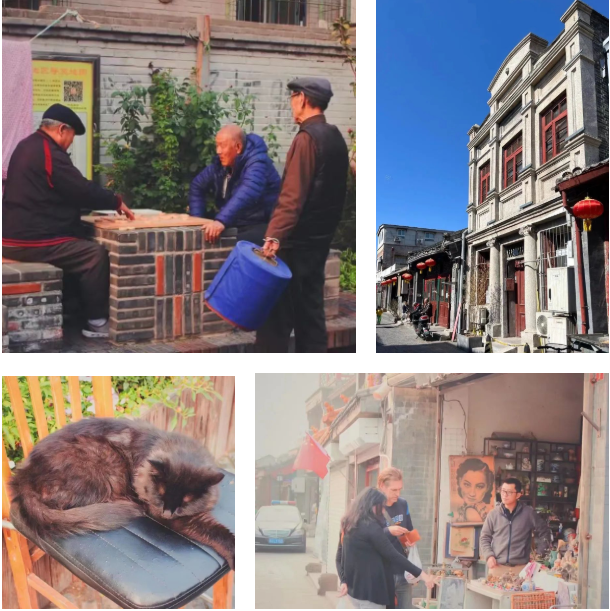
在今天的杨梅竹斜街,你可以看到一家家风格各异的咖啡店,引人驻足的设计师店铺,也能看到街边下象棋、遛鸟的大爷,在菜市场里穿梭的人群,以及街边晒太阳的小猫……
一切都是那么的文艺且简朴,让人一见倾心。
In today’s Yangmeizhu Xiejie, you can find cafés and boutique stores in various styles, as well as old men playing Chinese chess or walking birds on the street, buyers and vendors in the farmer’s market, kittens enjoying sunshine on the roadside…
Everything seems unnoticeable, but they together create an atmosphere of poetic appeal.